I’ll be there for you: The effects of exercise engagement on social support provision within undergraduate students’ personal networks
Abstract
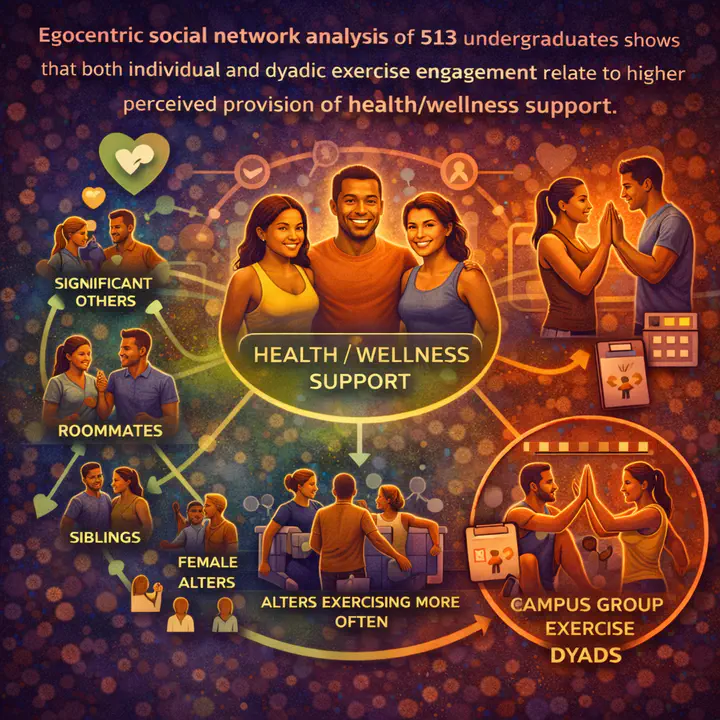
Egocentric social network analysis of 513 undergraduates shows that both individual and dyadic exercise engagement relate to higher perceived provision of health/wellness support. Significant others, roommates, siblings, female alters, and alters who exercise more often provide greater support; dyads where both members participate in campus group exercise report the highest support.
Type
Publication
Journal of American College Health