With a Little Help from My Friends: Momentary Social Structure, Function, and Quality as Drivers of Adolescent Physical Activity in the Summer
Abstract
Community Summary: Do teens move more when they are around other people? Forty Central Texas students in grades 6 to 8 answered short phone surveys up to six times a day for a week in summer 2025 and wore an activity tracker on their wrist. We looked at how active they were in the hour after each survey. Teens tended to be less active after moments when they were alone, and teens who named more people in their social circle were more active overall. When teens were with others, they were more active in the following hour at times when they said they would be likely to join in if someone suggested doing something active. How close they felt to the people around them, and whether they thought those people were active, did not make a clear difference. An invitation from a friend or family member at the right moment may be one of the simplest ways to help teens be active in the summer.
Abstract
Introduction and Objective: Adolescent physical inactivity remains a leading public health concern, with less than 25% meeting recommended guidelines. The U.S. Surgeon General’s advisory on social isolation and loneliness highlights social connection as a critical determinant of health, yet its momentary role in adolescent physical activity (PA) remains poorly understood. This study examined if the advisory’s dimensions of social connection (i.e., structure, function, and quality) were associated with moderate-to-vigorous PA (MVPA) among adolescents in the summer using ecological momentary assessment (EMA).
Methods: Forty adolescents (mean age=12.8 years, SD=0.9; 76% male; grades 6-8) were recruited via convenience sampling from central Texas school districts in summer 2025. Participants completed up to six random-prompt EMA surveys daily for seven days. At each EMA prompt, participants reported momentary structure (presence of and who they were with), function (perceived social influence and PA norms), and quality (emotional closeness). At enrollment, participants completed an egocentric network survey capturing person-level structure (network size and density), function (PA norms and frequency of interaction), and quality (closeness). The primary outcome was wrist-worn accelerometer-derived MVPA during the 60 minutes following each EMA prompt. Multilevel models examined 1,352 prompt-level observations nested within 40 participants, with predictors person-mean centered to separate within- from between-person effects.
Results: Regarding social structure, youth accumulated less MVPA following moments of being alone relative to their personal average (β=-0.12, p=.007), and youth with larger social networks accumulated more MVPA overall (β=0.07, p<.001). Among moments when not alone, youth reported greater MVPA in the hour following prompts when they indicated a greater-than-usual likelihood of joining in PA if someone they were with suggested it (function; β=0.07, p=.002). Perceived PA norms (function) and emotional closeness (quality) were not significant.
Conclusions: Both immediate and broader social structure were associated with adolescent MVPA, with momentary function (social influence) emerging as a significant factor. Interventions designed to activate peer influence within existing social networks during naturally occurring social moments may hold promise for promoting adolescent PA. The alone effect, while significant in primary models, attenuated when accounting for prior activity, suggesting habituation or carry-over effects warrant further investigation.
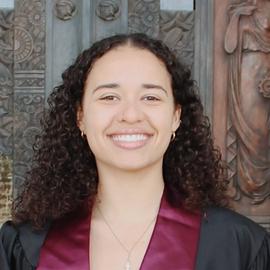
Veronika Croan
PhD Student - Colorado State University
Veronika is currently a PhD student in the Clinical Psychology Program at Colorado State University under the mentorship of Dr. Reagan Miller-Chagnon.
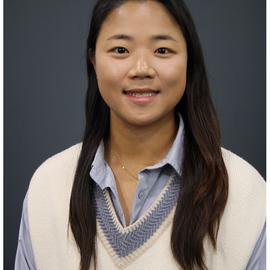
Jeong-Hui Park
Assistant Professor University of Oklahoma
Jeong-Hui Park, PhD, is a tenure-track Assistant Professor in the Department of Health and Exercise Science at the University of Oklahoma, following her doctoral training at Texas A&M University and postdoctoral research at The University of Texas MD Anderson Cancer Center.
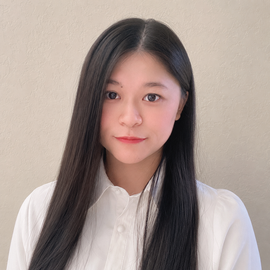
Yunlin Zhou
PhD Candidate
Yunlin Zhou, MPH, is a third-year PhD student and graduate assistant at the Texas A&M University School of Public Health, following the completion of master’s degree in Health Behavior at Texas A&M.